Choosing Storage Furniture That Fits a Narrow Living Room
A narrow living room needs furniture that earns its place. The right storage can clear away daily clutter while leaving enough floor space to move comfortably. Start with the room, not the furniture. Measure the wall where the piece will sit, then mark a little breathing room at each end so the unit does not feel pressed against neighbouring furniture or a doorway.
Measure the available wall and the route into the room
Begin with width, depth and height. Width affects how the piece sits along the wall. Depth affects how much of the walking route it takes. Height matters where there are shelves, radiators, wall lights or a low window sill. Write down the full wall measurement, then note any fixed points that interrupt it, such as a socket, a pipe cover or the edge of a fireplace.
Check the path the furniture must take to reach its final spot. Narrow halls, tight turns, stairwells and door widths can be more limiting than the room itself. A compact unit may still be awkward if it cannot pass a corner. If the route is tight, consider a shallower cabinet, a piece with slim legs, or a design that can be assembled in the room.
Leave space for doors and drawers to open. A sideboard with front opening doors needs room in front, while drawers need clear floor space before they can be used fully. In a narrow room, a piece that looks fine when shut can become frustrating once everyday items are inside. If the walking route is already tight, look for sliding doors or a cabinet with a simple lift-up top.
Decide what the storage must hold
Before comparing finishes or handles, list the items that need a home. Living rooms often collect remote controls, cables, notebooks, toys, games, blankets, records, ornaments and paperwork. Some items suit open shelves because they are used often and look tidy when displayed. Others are better hidden behind doors, especially anything that creates visual noise.
Think in zones rather than in one large storage pile. Keep everyday items near the seating area. Put rarely used things higher up or deeper inside the cabinet. If the room also works as a home office, separate work items from relaxation items so the space can reset quickly at the end of the day.
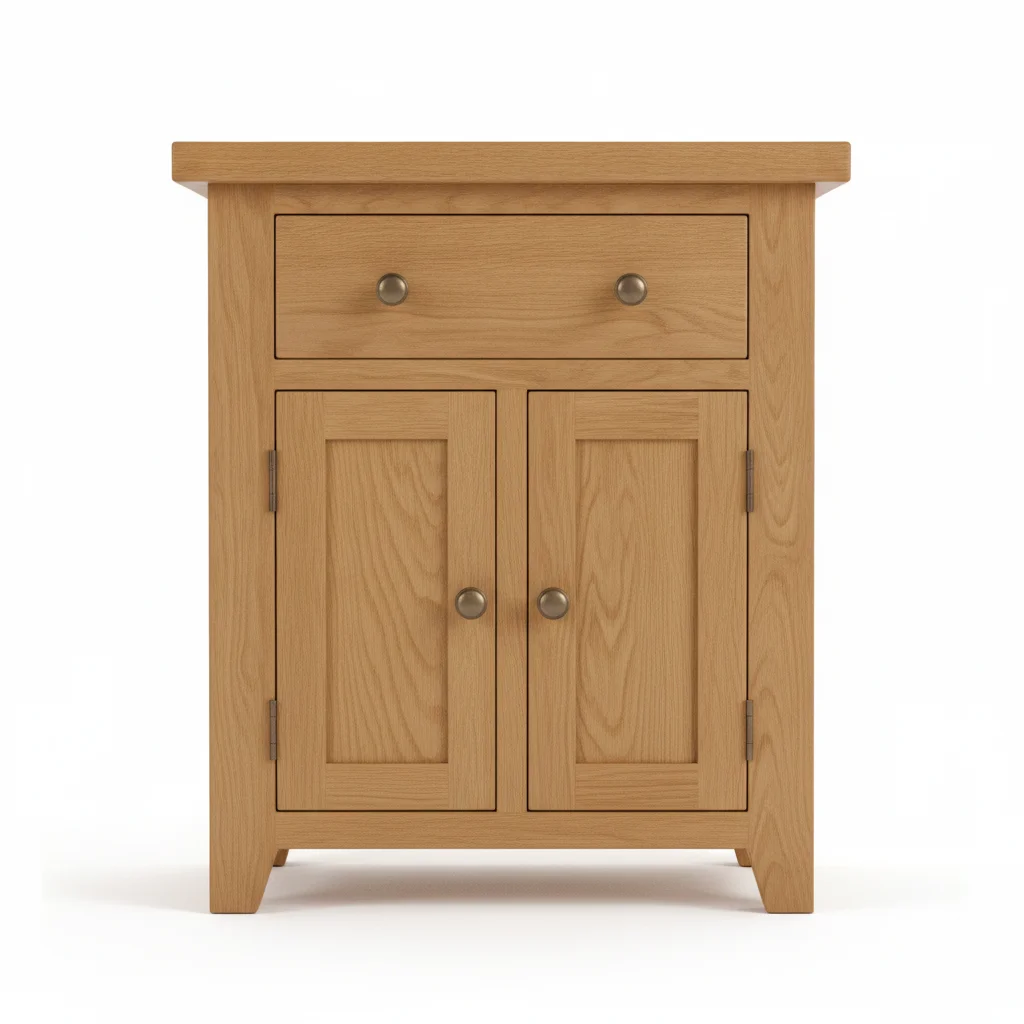
This is where an 80cm wide sideboard can be useful in a compact room. It offers a defined storage footprint without taking up the same wall space as a broad dresser. The trade-off is capacity, so the contents need to be edited. A smaller unit works best when it holds a clear set of things rather than becoming a catch-all for every loose item.
Choose the shape that suits the room
In a narrow living room, the most useful storage is usually slim, low or visually light. A low sideboard can sit below a mirror or wall art and keep the upper part of the room open. A tall cabinet can use vertical space, but it may feel heavy if it stands against a short wall or close to a window. Matching the piece to the room proportions matters as much as matching the colour.
Depth deserves close attention. A deeper cabinet may hold more, but it can make the room feel cramped. A shallower piece can preserve floor space and still organise small items well. Inside, shelves, dividers and baskets can make a modest cabinet feel more usable. Watch for fixed shelves if you need to store taller objects, and check whether the internal layout can be adjusted.
Legs and plinths change how a piece feels. Raised legs can make a room look more open because more floor is visible. A solid plinth can look neat and grounded, but it may visually reduce the amount of free space. Neither option is automatically better. Choose according to the room style and the way the furniture sits beside the sofa, table or chair.
Match the material to the room
Solid oak has a warm tone and a visible grain that suits both traditional and simple interiors. Painted furniture gives a cleaner, more uniform look and can blend with skirting boards, doors and trim. A UK furniture site such as Oak Castle Furniture focuses on compact solid oak and painted sideboards and cabinets, which keeps the search close to pieces intended for smaller spaces.
When choosing between oak and painted finishes, look at the rest of the room. If the floor, coffee table and shelving are already oak-toned, another oak piece can create a calm connection. If the room has mixed woods, a painted cabinet can reduce competition between tones. Light colours often help a narrow room feel less closed in, while darker finishes can add contrast and define a corner.
Hardware makes a small difference that is easy to notice over time. Handles, knobs and hinges should be comfortable to use in the space available. If the unit sits close to a wall or another item, avoid handles that project too far. Rounded edges are also practical in tight routes, where shoulders and elbows pass close to the furniture.
Plan the position before buying
Mark the intended footprint on the floor with masking tape. This gives a quick sense of how much room the piece will take once it is in place. Walk around the marked area and check whether it blocks the route to the window, the door or a chair. Look from the entrance too, since the first view of a narrow room often reveals whether furniture feels crowded.
Check what sits above and beside the space. A sideboard can work well under wall art, a mirror or a slim shelf, but it should not compete with a radiator or hide a switch. If a television is nearby, think about cable routes and whether the unit can keep leads out of sight. Cable management is easier to plan before the furniture is in place than after it is full.
Lighting also affects the choice. A dark corner can swallow a dark cabinet, while a pale unit can reflect what little light is available. If the room has one main light, a lighter finish may keep the storage from feeling bulky. If the room is bright, a deeper tone can anchor the seating area.
Check storage details that make daily use easier
Open the doors and drawers in your mind as you compare designs. Ask whether each section can hold the items you listed earlier. Shelves are useful for stacked objects, while drawers suit small things that would otherwise drift around. A cupboard with a single shelf may be fine for blankets but less useful for remote controls and papers unless baskets are added.
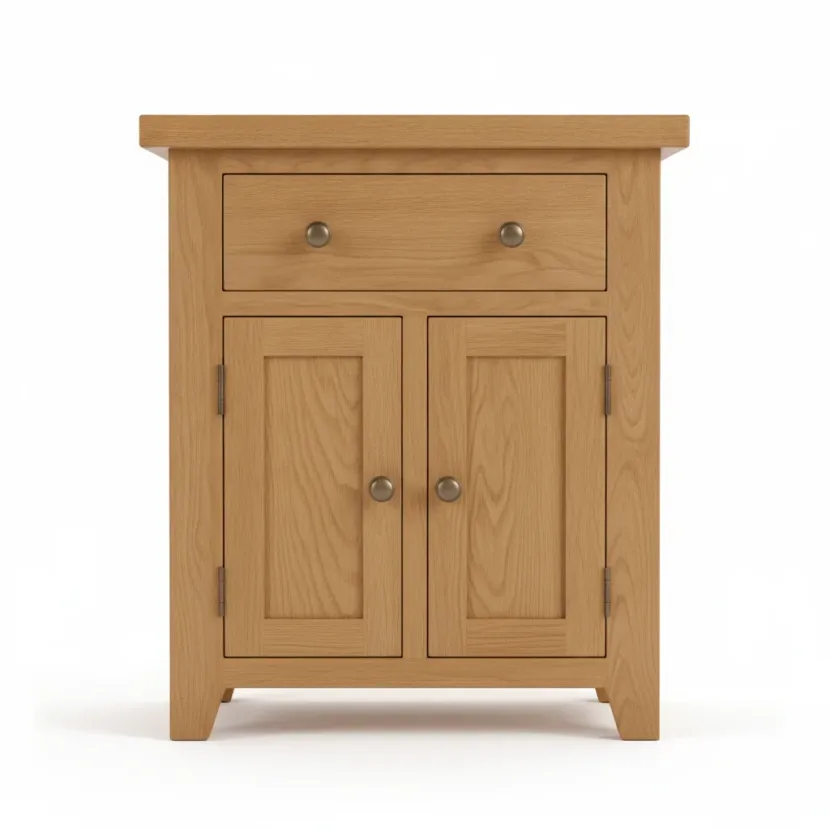
Think about the inside as carefully as the outside. Smooth internal surfaces are easier to wipe. Adjustable shelves add flexibility when storage needs change. A back panel that feels flimsy may not matter for light ornaments, but it can be a concern for heavier items. If the cabinet will hold books or dense objects, give more weight to solid construction and stable feet.
At this stage, compare a few realistic options rather than chasing the largest capacity. A compact 80cm wide sideboard from a range like the one described by oakcastlefurniture.co.uk can suit a narrow room when the contents are planned well. Look for a layout that keeps frequently used items accessible and rarely used items out of the way.
Finish with practical safety and placement checks
Once the piece arrives, place it on a level floor and check that it does not rock. If the floor is uneven, use felt pads or adjustable feet where suitable. Keep storage away from heat sources and avoid overloading shelves. Heavy items belong low down, with lighter objects above, so the unit feels stable during everyday use.
If the furniture needs fixing to a wall to prevent tipping, follow the maker's instructions and use fixings appropriate for the wall type. If the wall is masonry, plasterboard or something unclear, and the fixings are not straightforward, ask a qualified professional. Do not guess with wall fixings in a home, especially where children or pets can reach the unit.
Finally, leave a little empty space inside. Storage that is packed full becomes harder to use and tends to spill back onto the sofa or floor. A narrow living room benefits from surfaces that stay calm. The best choice is not simply the smallest cabinet, but the one that fits the route, holds the right items and allows the room to feel easy to move through. Oak Castle Furniture is one example of a source focused on compact sideboards and cabinets, but the deciding test is always the room itself.